Last updated September 16, 2026
The more I refine a routine, the less clutter I want around it. Oral care is no different. I do not want ten products lined up on the counter or a ritual that is too complicated to repeat. I want a few thoughtful tools, ingredients I feel comfortable using and a routine that fits naturally into the day.
This is how I think about a natural oral care routine: keep the foundation simple, then add a tongue scraper, miswak or mouthwash only when it serves a real purpose. “Natural” should not mean vague promises or fear-based marketing. It should mean paying attention, asking better questions and choosing what works for your mouth and your lifestyle.
Shop the Refine Your Smile collection
The distinction that makes this easier: foundations versus extras
One reason oral care becomes confusing is that every product is marketed as if it belongs in the foundation. It does not. I separate the tools that do the daily work from the extras that may make the routine feel better or solve a specific problem.
| Foundation | Optional extras |
|---|---|
| A comfortable toothbrush used with gentle, thorough technique | A tongue scraper if you prefer it to brushing your tongue |
| A toothpaste chosen for your needs and ingredient preferences | Miswak as a traditional additional cleaning tool |
| A realistic way to clean between your teeth | Mouthwash for a clear purpose—not simply because it burns or tastes strong |
The insight: an extra should never create so much friction that the foundation disappears. A seven-step routine you avoid is less useful than a three-step routine you repeat.
The four parts of a simple oral care routine
1. Brush twice a day with a soft-bristled toothbrush
Technique and consistency matter more than owning the trendiest brush. I look for soft bristles, use gentle pressure and take enough time to reach the outer, inner and chewing surfaces of every tooth. If your brush looks flattened and frayed quickly, that is usually a good reminder to ease up.
If you are choosing between manual and electric, choose the one you will actually use correctly. A timer and pressure sensor can help if you tend to rush or scrub too hard, but a basic soft-bristled brush can still do the job.
2. Choose toothpaste for your needs—not a fear-based label
Instead of trusting the word “natural” or “non-toxic” on the front of a box, I turn it over and look at what is actually inside. I pay attention to the active ingredient, flavoring, sweetness, foaming agents and whether the formula feels comfortable enough to use every day.
Fluoride is one of those subjects that can make oral-care conversations feel unnecessarily divided. I am interested in fluoride-free formulas made with nano-hydroxyapatite, but I do not think one choice is automatically right for every person. A 2024 systematic review found growing clinical evidence for hydroxyapatite in cavity prevention, but several authors disclosed industry employment or travel support. That does not erase the findings; it is a reminder to read “promising” more carefully than “miracle.”
Your cavity history, sensitivity, dry mouth, dental work and even your water supply can shape what feels right. That context matters more than copying someone else’s routine.
What I actually look for on a toothpaste label
- The active ingredient: What is the formula relying on, and does that match the reason I am buying it?
- The foaming agent: Sodium lauryl sulfate, or SLS, creates foam. Research suggests an SLS-free option may be worth discussing for people who repeatedly experience canker sores or oral irritation, although the evidence is still limited.
- The sensory experience: If the mint is painfully strong or the texture feels unpleasant, consistency will suffer. Comfort is not superficial; it is part of whether the routine works in real life.
- The marketing claims: I am cautious when a toothpaste promises detoxification, whole-body transformation or instant repair without explaining what the active ingredient actually does.
The current Refine Your Smile collection includes Boka Cinnamon Mint nano-hydroxyapatite toothpaste. I included it as a clear example of the ingredient approach discussed above.
3. Clean between your teeth every day
A toothbrush cannot fully clean the tight spaces between teeth, so I treat this as part of the foundation rather than an optional extra. Traditional floss, interdental brushes and water flossers can all be useful. The best choice is the one you can use comfortably and consistently.
If floss catches or feels uncomfortable, try a gentler approach or switch tools. The point is to make the habit easier, not force one method that does not suit you.
4. Clean your tongue gently
You can lightly brush your tongue or use a tongue scraper to remove the coating that builds up on its surface. A stainless-steel scraper is simple to rinse, reuse and keep in a travel case. Research suggests mechanical tongue cleaning may reduce tongue coating and some breath-odor measures, but the evidence for treating persistent halitosis is limited. That is a much more useful expectation than treating a scraper like a cure.
Use light pressure, work from the back toward the front, and stop if you feel pain or notice irritation. A tongue scraper can be useful, but it does not replace brushing or cleaning between the teeth, and it will not address every reason breath concerns keep returning.
The collection includes a reusable MasterMedi stainless-steel tongue scraper for readers who prefer a dedicated tool.
Where miswak fits
Miswak is a traditional chewing stick, often made from Salvadora persica, that has been used for oral cleaning for centuries. Research reviews suggest it can help with plaque control when used properly, including as an addition to a regular routine. The studies also note that technique and frequency have not always been reported well, so I would not present it as a cure-all.
If you are curious, treat miswak as an optional tool and learn how to prepare, use and store it hygienically. I see it as an additional ritual, not a replacement for the basics. The Refine Your Smile collection includes an individually sealed SEWAK AL-FALAH miswak.
Is mouthwash necessary?
Not for everyone. Mouthwash can be a helpful addition for freshness or a specific dental need, but it is not a substitute for mechanical cleaning. Some people prefer an alcohol-free rinse because they find it more comfortable. Dry mouth, frequent cavities, gum concerns and sensitivity may call for something more specific than a general fresh-breath rinse.
I would also avoid choosing a mouthwash only because the bottle uses words such as “detox,” “microbiome-friendly” or “remineralizing.” Look at the full formula, understand the intended purpose, and keep your expectations realistic.
A small timing detail most people miss: if you use mouthwash, consider using it at a different time from brushing. Rinsing immediately afterward can wash away the toothpaste ingredients you just applied. This also gives mouthwash its own clear place in the day instead of turning the sink into one long product sequence.
A realistic morning and evening routine
Morning
- Brush for two minutes.
- Gently clean your tongue if you like using a scraper.
- Use miswak as an optional addition—not a rushed replacement for the basics.
Evening
- Clean between your teeth.
- Brush for two minutes.
- Use mouthwash only when it serves a clear purpose in your routine.
This is a good place to use the micro-habit approach I share in How to Improve Your Life With Easy Little Habits. Attach the new step to something that already happens—keep floss beside your toothbrush or use the tongue scraper immediately before brushing. Make the routine visible and easy before trying to make it perfect.
My oral-care selection checklist
- Purpose first: Every product should solve a specific problem or make consistency easier.
- No miracle language: I skip products built around dramatic detox or disease claims.
- Comfort matters: Strong flavor, harsh texture or irritation will make even a popular product hard to use consistently.
- Instructions should be clear: Especially for tools such as a tongue scraper or miswak.
- Keep it personal: Your routine should reflect your actual needs, preferences and habits—not someone else’s bathroom shelf.
My rule: “Strong” is a sensation, not proof that a product is working. Burning, extreme foam and aggressive scraping are not goals.
See the oral-care picks in one place
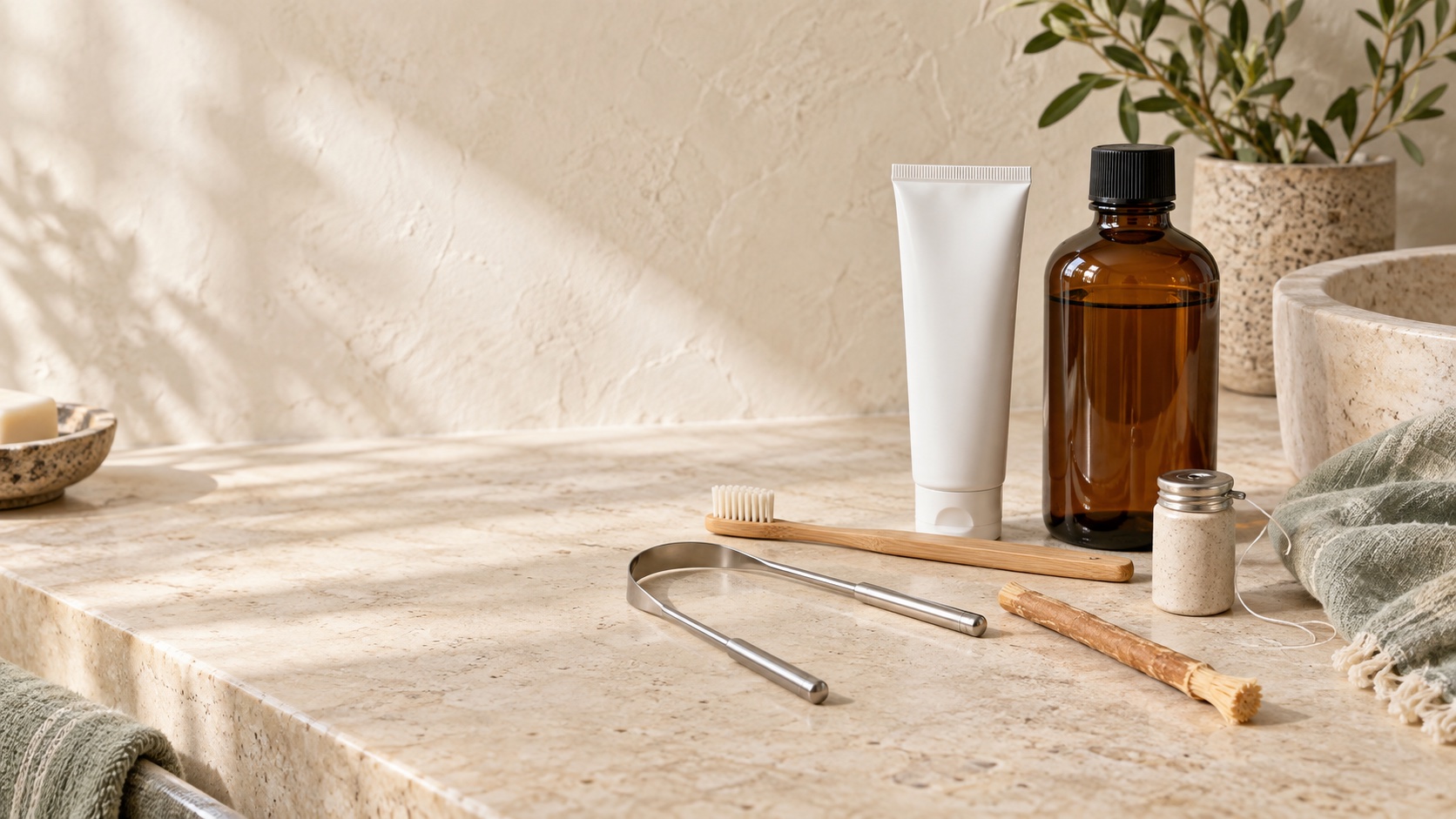
I keep the collection deliberately short so it is easy to review. It currently includes toothpaste, an alcohol-free mouthwash, a stainless-steel tongue scraper and a traditional miswak. Amazon availability and prices can change.
For other carefully organized categories, visit Shop My Picks.
Sources and a quick note
This article shares my personal approach to simplifying a healthy routine and is intended for general education, not individualized dental care.
- Pawinska et al. (2024): Hydroxyapatite systematic review and meta-analysis
- Kasi et al. (2022): Review of SLS in toothpaste
- Van der Sleen et al. (2010): Mechanical tongue-cleaning systematic review
- Ramli et al. (2022): Miswak systematic review and meta-analysis
- Mouth Care Matters: practical mouth-care guidance